When searching for a place to live in Korea, foreign tenants quickly discover that Korean housing types don’t quite match what they know from home. Terms like villa, officetel, or single house carry meanings specific to Korea — and choosing the wrong type can lead to surprises in size, cost, or even alien registration eligibility.
This guide breaks down the four main housing categories in Seoul: villa, apartment, single house, and officetel. By the end, you’ll know which one fits your lifestyle, family situation, and budget.
Quick Comparison: Korean Housing Types at a Glance
| Type | Korean Name | Typical Size | Stories | Deposit Range (KRW) | Monthly Rent (KRW) |
|---|---|---|---|---|---|
| Villa | 빌라 (billa) | 60–150 sqm | 2–5 | 30M–150M | 1.5M–5M |
| Apartment | 아파트 (apateu) | 60–300+ sqm | 10–50+ | 50M–500M+ | 3M–20M+ |
| Single House | 단독주택 (danokjutaek) | 100–400 sqm | 1–3 | Varies widely | Varies widely |
| Officetel | 오피스텔 (ophiseutel) | 20–50 sqm | Mixed-use high-rise | 10M–50M | 700K–2M |
Note: These ranges reflect typical expat-grade housing in central Seoul neighborhoods. Luxury properties in areas like Hannam, UN Village, and Seorae Village can exceed these ranges significantly.
Villa (빌라) — Low-Rise Residential Buildings
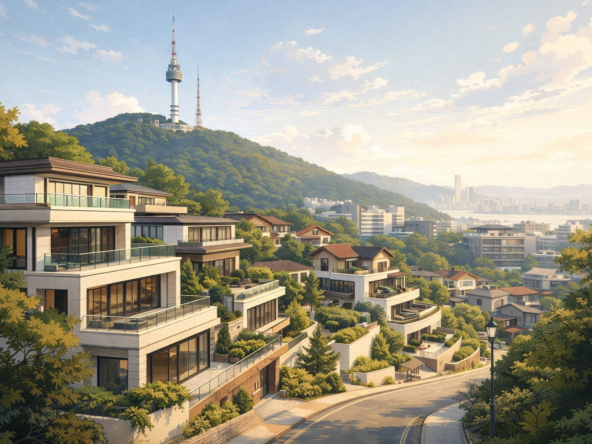
In Korea, a “villa” doesn’t mean a luxury countryside home. It refers to a low-rise residential building with 2 to 5 floors, usually containing 4 to 20 units. Villas are most commonly found in residential neighborhoods like Itaewon, Hannam, and Seorae Village, where many expat families prefer the quieter, more private atmosphere.
Key Features
- More privacy than apartments — fewer neighbors, less common-area traffic
- Private outdoor space in some units (terraces, small gardens, rooftops)
- Flexible interiors — older villas often have unique layouts you won’t find in apartments
- Fewer rules — no large management committee imposing restrictions
- No major amenities like gym, pool, or front desk
Best For
Families with children, pet owners, residents who value space and quietness over building amenities, and tenants seeking character-rich homes in established neighborhoods.
Drawbacks
Older villas may have weaker insulation, less reliable heating, or limited parking. Maintenance response can be slower than at managed apartment complexes.
Apartment (아파트) — Large-Scale High-Rise Complexes
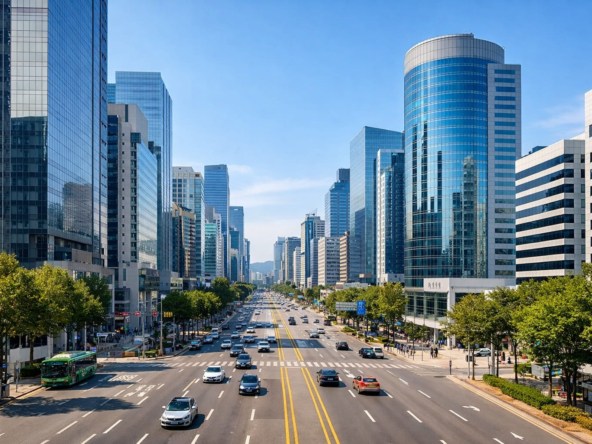
A Korean apartment is a large-scale, multi-building complex of high-rise towers, typically 10 to 50+ stories. Each complex (called a danji, 단지) functions like a small village, with its own management office, security, parking, and amenities. Famous expat-friendly apartment complexes include Hannam The Hill, Nine One Hannam, and Hyundai I’Park Yongsan.
Key Features
- Professional management — 24/7 security, maintenance, deliveries handled at the gate
- Amenities — gym, swimming pool, sauna, community lounge, playground (varies by complex)
- Predictable layouts — standardized floor plans across units
- Strong resale and rental demand — keeps property values stable
- Reliable heating, hot water, and elevator service
Best For
Diplomatic families, corporate expats on company-paid housing, residents who value security and convenience over uniqueness, and families with school-aged children near international schools.
Drawbacks
Higher deposits and monthly rent than villas of comparable size. Less flexibility in interior changes due to building rules. Limited outdoor or garden space.
Single House (단독주택) — Detached Homes
A single house in Korea is a fully detached, standalone building — closest to what Western countries call a “single-family home.” These are uncommon in central Seoul but can be found in neighborhoods like Pyeongchang-dong, Seongbuk-dong, UN Village, and parts of Itaewon.
Key Features
- Full privacy — no shared walls, ceilings, or floors
- Yard and garden space — often with parking for multiple cars
- Maximum customization — usually no building-level rules
- Higher maintenance responsibility — no management office for repairs or utilities
Best For
Senior diplomats, ambassadors, executives, and families who prioritize privacy, garden space, and unique architecture over convenience.
Drawbacks
Limited supply in central Seoul, higher utility and maintenance costs, security depends entirely on the tenant (no front desk or guard).
Officetel (오피스텔) — Mixed-Use Studio Units
The officetel is uniquely Korean — a portmanteau of “office” and “hotel.” It’s a mixed-use unit, typically in a high-rise building, that can be used as either a small office or a compact residence. Officetels are common in business districts like Gangnam, Yeouido, and Jongno.
Key Features
- Compact size — usually 20–50 sqm, sometimes with loft sleeping areas
- Lower deposits and monthly rent than apartments
- Often fully furnished — popular among short-term residents
- Mixed use — units in the same building may be residential or commercial
⚠️ Important Caveat for Foreigners
Some officetels are registered as office spaces rather than residential, which means tenants cannot use the address on their Alien Registration Card (외국인등록증). Always confirm registration status before signing, especially if you need the address for visa or banking purposes.
Best For
Singles, short-term residents, business travelers staying 3–12 months, and remote workers who want a compact home-office setup.
Drawbacks
Limited space for families or long-term residents, potential alien registration issues, building noise from commercial floors.
Which Housing Type Suits Your Lifestyle?
Choose based on these scenarios:
- Single professional, 6–12 month stay → Officetel in Gangnam or near your office
- Diplomatic family with children → Apartment in Hannam, UN Village, or near your school
- Family wanting privacy and garden → Villa in Itaewon, Seorae, or single house in UN Village
- Senior executive or ambassador → Single house or premium apartment in Pyeongchang-dong, Seongbuk-dong, or Hannam
- Pet owner with active dog → Villa or single house with outdoor space
Frequently Asked Questions
What’s the difference between a Korean villa and an apartment?
A villa is a low-rise residential building (2–5 floors, few units), while an apartment is part of a large multi-building complex with 10+ floors per tower. Apartments offer professional management and amenities; villas offer more privacy and lower costs.
Can I live in an officetel as a foreigner?
Yes, but verify that the unit is registered for residential use, not office use. Otherwise, you won’t be able to register the address on your Alien Registration Card, which can complicate visa and banking applications.
Are Korean villas safe and well-maintained?
It varies by building age and management. Newer villas (built in 2010 or later) generally have good insulation, security, and parking. Older villas may have weaker infrastructure but offer larger floor plans and more character. A licensed real estate agent can advise on specific buildings.
What’s the most popular housing type for expats in Seoul?
For diplomatic and corporate expats, large apartment complexes in Hannam (Hannam The Hill, Nine One Hannam) and UN Village are the most popular due to security, amenities, and proximity to international schools. Villas in Itaewon and Seorae Village are second most common.
Which housing type has the lowest monthly rent?
Officetels generally have the lowest monthly rent (700,000–2,000,000 KRW), but they’re also the smallest. For more space at moderate rent, smaller villas in Itaewon or older apartment units offer better value than premium apartments.
Looking for Housing in Seoul?
Hometown Realty specializes in matching foreign tenants with the right Korean housing type — whether you need a family-sized villa in Hannam, a professionally managed apartment near international schools, or a compact officetel near your office.
Browse our listings by type:
WhatsApp / KakaoTalk: +82-10-8478-9555 (Kakao ID: Hakfilm)
Email: rent@hometownrealty.co.kr