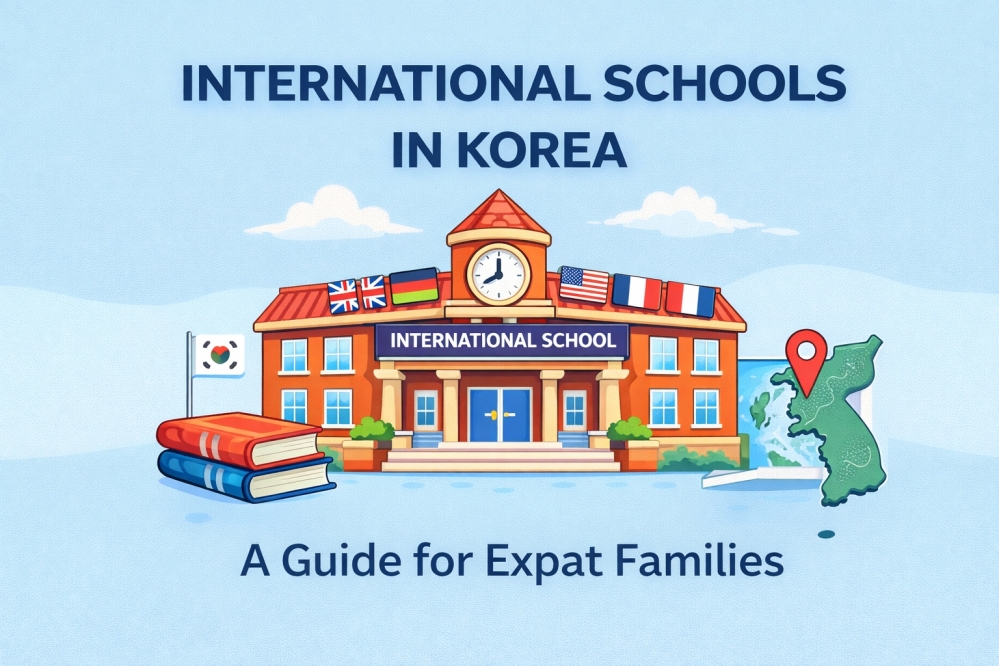
Choosing the right international school is one of the most important decisions expat families face when relocating to Korea. School selection influences not only a child’s education, but also housing choices, daily commute, and overall family life.
This guide explains how international schools in Korea are structured, how to compare different curricula, and why location and relocation planning matter just as much as academics.
Types of International Schools in Korea
The term international school in Korea can refer to different types of institutions. Understanding these differences is essential before making any decisions.
In general, schools fall into three categories:
- Accredited international schools following foreign curricula
- Foreign schools officially recognized under Korean law
- Private schools offering international-style programs (which require careful verification)
Families should always confirm accreditation status, diploma recognition, and university pathways before applying.
Choosing an International School by Curriculum
Many expat families prioritize schools aligned with their home country’s education system or future university plans.
British Curriculum Schools in Korea
British-based education is offered at schools such as Dulwich College Seoul, British School of Seoul, and Korea Kent Foreign School.
These schools typically follow the English National Curriculum, IGCSEs, and A-Levels, making them suitable for families planning UK or Commonwealth education pathways.
American Curriculum Schools in Korea
American-style education is available at Seoul Foreign School, Yongsan International School of Seoul, and Dwight School Seoul.
These schools often offer AP courses or IB programs alongside U.S.-based credit systems and are popular with families considering American universities.
International Baccalaureate (IB) Schools
Families seeking a globally transferable curriculum often consider IB programs. Examples include Dulwich College Seoul, Dwight School Seoul, and Chadwick International School.
IB schools are especially suitable for families expecting future relocations to different countries.
German and French Curriculum Schools
European national curricula are available at Deutsche Schule Seoul International and Lycée Français de Séoul.
These schools are closely connected to their respective national education systems and are ideal for families planning to return to Germany or France.
Location and Commute: A Key Factor for Expat Families
One of the most common mistakes expat families make is choosing a school without considering daily logistics.
Important factors include:
- Distance between home and school
- Commute time during peak hours
- School bus availability
- Proximity to parents’ workplaces
Daily commute time can significantly affect a child’s well-being and overall family quality of life, making location just as important as curriculum.
Admission Timing and Availability
International schools in Korea often have:
- Limited availability by grade
- Waiting lists, especially for early years
- Admission cycles aligned with international academic calendars
Many families plan housing decisions around school availability rather than the other way around.
Why School Selection Should Be Part of Relocation Planning
Choosing an international school should not be treated as a standalone decision. Housing, neighborhood environment, medical facilities, and transportation should be evaluated together.
Many expat families benefit from orientation services, school tours, and neighborhood walkthroughs before committing to a lease. Seeing the school and surrounding area in person often provides clarity that online research alone cannot.
Final Advice for Expat Families Moving to Korea
There is no single “best” international school in Korea. The right choice depends on:
- Your child’s age and learning style
- Long-term education plans
- Family lifestyle and work location
- Expected length of stay in Korea
Careful planning and local insight can help families avoid costly mistakes and make confident decisions when relocating to Korea.