
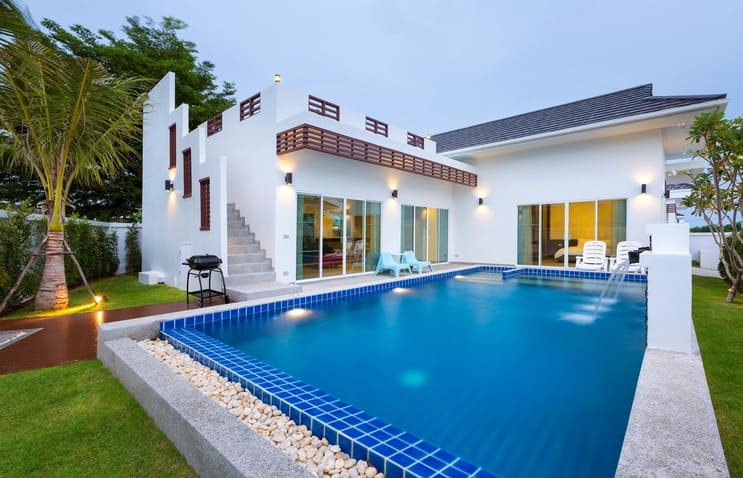
For expats looking for more space, privacy, and character than a standard apartment offers, renting a Korean villa in Seoul is often the best option. Villas in Korea don’t match the Mediterranean-style detached houses the word suggests in most Western countries — instead, they’re low-rise residential buildings of 2 to 5 floors, typically found in Seoul’s most desirable expat neighborhoods. This guide covers what makes villa rentals unique, which Seoul neighborhoods offer the best villas, and exactly what to inspect before signing a lease.
What Is a Korean Villa?
In Korean real estate terminology, a “villa” (빌라, billa) is a small residential building with 2 to 5 floors and usually 4 to 20 units. Each floor typically contains one or two apartments, and the building is owned by an individual landlord rather than a management corporation. This is fundamentally different from a Korean “apartment” (아파트), which refers to a large-scale, multi-building complex with 10+ stories and professional management.
For a full comparison of Korean housing types — apartments, villas, single houses, and officetels — see our complete guide to Korean housing types.
Where to Find Quality Korean Villas in Seoul
Contrary to a common misconception, quality villas are located throughout central Seoul — including some of the most sought-after expat neighborhoods. The best villa neighborhoods for foreign tenants include:
- Itaewon and Hannam — The largest concentration of expat-oriented villas. Many were renovated or newly built in the past decade, offering modern interiors with the character of established neighborhoods.
- Seorae Village — French Village. Villas here often have terraces or private gardens, popular with families whose children attend the Lycée Français or Dulwich College.
- UN Village — Premium villas with Han River views, cluster of diplomatic and executive families.
- Yeonhui-dong — Villas near Seoul Foreign School, quieter residential feel.
- Pyeongchang-dong and Seongbuk-dong — Larger, garden-style villas favored by senior executives and diplomats.
Villas outside these neighborhoods can be cheaper but often lack the language support, security, and community that make Seoul expat life comfortable.
How Villa Rentals Differ from Apartment Rentals
Understanding these differences is critical before choosing between an apartment and a villa:
| Feature | Villa | Apartment |
|---|---|---|
| Building size | 2–5 floors, 4–20 units | 10–50+ floors, hundreds of units |
| Management | Individual landlord | Professional management office |
| Amenities | Usually none | Gym, pool, sauna, lounge |
| Security | No doorman/guard | 24/7 security, front desk |
| Parking | Often limited or none | Multi-level underground parking |
| Elevator | Often no elevator | Multiple elevators |
| Common fees (관리비) | Low (100K–300K KRW/month) | High (300K–1M+ KRW/month) |
| Sound insulation | Often weaker | Usually stronger |
| Character | Unique layouts, older charm | Standardized, modern |
| Repair response | Depends on landlord | Managed, faster |
For most expat families, the trade-off comes down to privacy and character (villa) vs security and amenities (apartment).
Villa-Specific Inspection Points Before Signing
Because villas are owned by individual landlords rather than managed by a corporation, the physical condition and management quality varies significantly. Before signing a villa lease, inspect these villa-specific points:
1. Parking
Villa parking is one of the most common regrets. Confirm exactly how many parking spots are assigned to your unit, where they are, and whether guests can park. Some villas have no parking at all — a serious issue if you own a car.
2. Elevator
Many older villas (built before 2010) do not have elevators. If you’re renting on the 4th or 5th floor, verify the walk-up situation, especially if you have young children, elderly parents, or plan to move heavy furniture.
3. Insulation and Heating
Older villas may have weaker insulation than modern apartments. Ask about winter gas bills from the current or previous tenant — this reveals real insulation quality better than any inspection. Well-insulated villas run 200,000–400,000 KRW monthly in gas during winter; poorly insulated ones can exceed 700,000 KRW.
4. Noise Between Floors
Villas typically have thinner floors than apartments. If you value quiet, visit the unit at different times of day. Ask who lives above and below — families with young children can create noise concerns.
5. Water Pressure
Some villas — especially on upper floors of older buildings — have weak water pressure. Test the shower and kitchen tap during inspection.
6. Mold and Water Damage
Check bathrooms, closet corners, and areas near windows for mold signs. Villas with poor ventilation have chronic mold problems that are difficult to fix once tenants move in.
7. Security
Villas rarely have doormen or 24/7 security. Verify the entrance keypad, individual unit locks, and whether the building has CCTV. Ground-floor units require extra security attention.
8. Rooftop and Common Areas
Ask about rooftop access — some villas have private rooftop terraces for top-floor units, while others share the space. Clarify usage rights in writing.
Villa-Specific Questions to Ask Before Signing
Beyond physical inspection, ask the landlord (through your agent) these villa-specific questions:
- Who owns the other units, and who lives there? (Are neighbors tenants, owners, or the landlord’s family?)
- What year was the building built, and when was it last renovated?
- Are there any planned renovations or construction during your lease term?
- What’s the exact management fee, and what does it cover? (Villa 관리비 varies widely — some include water, some don’t)
- How is trash and recycling handled? (Villas typically use municipal bags, not a central disposal system)
- Is there bicycle or motorcycle storage?
- What’s the internet situation? (Some villas have building-wide contracts; others require individual setup)
Deposit and Lease Structure
Korean villa leases follow the same deposit system as other housing types — Jeonse, Wolse, or Semi-Jeonse — with typical villa deposits ranging from 30 million to 150 million KRW depending on the unit. For a full explanation of how Korean deposits work and how to trade higher deposits for lower monthly rent, see our Korean apartment deposit system guide.
For expats staying under a year, short-term villa rentals are also available with lower deposits, though inventory is limited.
Frequently Asked Questions
What’s the difference between a Korean villa and a Korean apartment?
A Korean villa is a low-rise building with 2 to 5 floors and typically 4 to 20 units, owned by an individual landlord. A Korean apartment is a high-rise complex of multiple towers with professional management, gym, security, and amenities. Villas offer more privacy and lower management fees; apartments offer more security and amenities.
Are Korean villas cheaper than apartments?
Generally yes, especially for equivalent floor area. Villa monthly rent and common management fees (관리비) run 30–50% lower than comparable apartments. However, villa utility bills — especially heating — can be higher due to weaker insulation, which partially offsets the savings.
Which Seoul neighborhoods have the best villas for expats?
Hannam, Itaewon, Seorae Village, UN Village, Yeonhui-dong (near Seoul Foreign School), Pyeongchang-dong, and Seongbuk-dong. Each has a different character: Itaewon and Hannam for centrality and community, Seorae for the French village atmosphere, UN Village and Pyeongchang for premium quiet living.
Do Korean villas have parking?
Not always. Older villas (built before 2010) often have limited or no parking. Newer villas usually have 1 dedicated space per unit in a small underground or ground-level lot. If you own a car, confirm parking arrangements in writing before signing.
What should I inspect before renting a Korean villa?
Beyond standard checks, prioritize villa-specific issues: parking, elevator (or lack of), insulation quality (ask about winter gas bills), water pressure, mold in bathrooms, sound insulation between floors, and building security. These are the most common sources of villa-tenant regret.
Can foreigners rent Korean villas as easily as apartments?
Yes. There’s no legal difference in villa versus apartment rental procedures for foreigners. However, because villa landlords are individuals rather than corporations, the negotiation and lease drafting process is more personal — an English-speaking real estate agent is essential to bridge language and cultural gaps.
Working with a Villa Rental Specialist
At Hometown Realty, we’ve helped expat families rent villas across Seoul’s top neighborhoods for over a decade. Because each villa is owned by an individual landlord with unique conditions, the inspection, negotiation, and lease process differs significantly from apartment rentals. Our team handles:
- Villa-specific inspection and quality verification
- Landlord background checks and lease negotiation
- Bilingual contracts with clear terms on management fees, parking, and repairs
- Move-in and move-out coordination, including deposit protection
Browse our current villa listings:
WhatsApp / KakaoTalk: +82-10-8478-9555 (Kakao ID: Hakfilm)
Email: rent@hometownrealty.co.kr